


Mini LED Dispensing
Precision dot dispensing, reflector cup filling and dam dispensing for mini LED backlight arrays and local-dimming display modules.
High-Density Precision Dispensing for Mini LED Backlight Arrays
Mini LED backlighting has become the dominant technology for premium LCD televisions, monitors and automotive displays, using LED die in the 100–300 µm range arranged in dense arrays that number from several hundred to tens of thousands of individually addressable local-dimming zones per panel. Each LED site typically requires a dispensed dot of phosphor-converting silicone or a reflective dam to shape and direct light output, and the sheer number of dispense points per panel — combined with the requirement for consistent brightness zone-to-zone — makes mini LED one of the highest-throughput, highest-precision dispensing applications in the display industry.
Dispensing accuracy directly determines backlight uniformity: a phosphor-silicone dot that varies in volume by even a few percent from its neighbours will produce a visible brightness or color-point mismatch between local-dimming zones, a defect immediately apparent to end users on a finished display. Reflector cup and dam dispensing must also be contained precisely within each LED site boundary to prevent light leakage between adjacent dimming zones, which would compromise the local-dimming contrast ratio that is mini LED's primary value proposition over conventional backlighting.
SANCO high-speed multi-nozzle dispensing platforms and high-speed dispensers deliver the dot-to-dot volume repeatability, CCD vision zone mapping and production throughput required for mini LED backlight assembly at the panel volumes demanded by consumer and automotive display manufacturing.
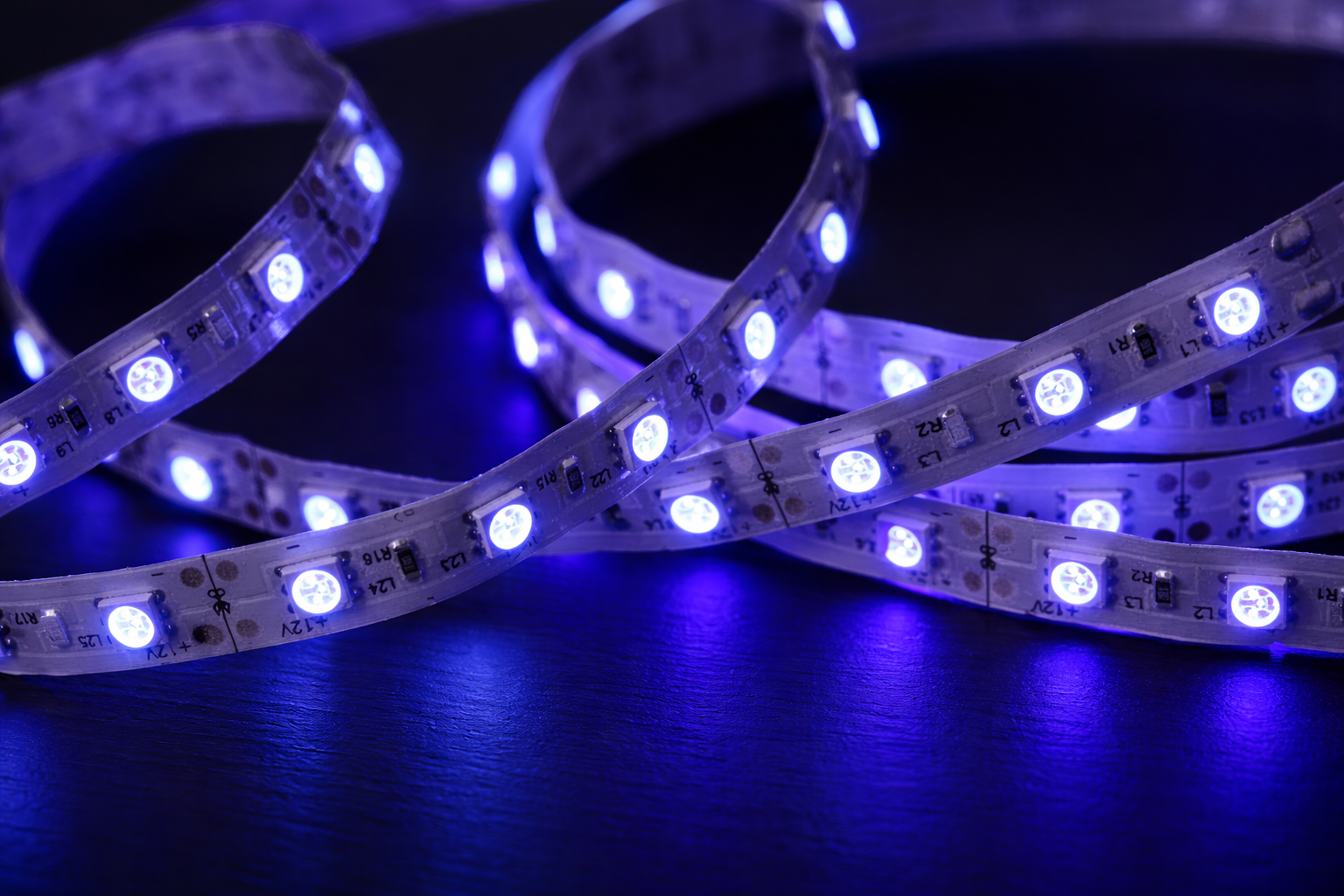
Why Mini LED Dispensing Demands Dot-to-Dot Consistency at Scale
Mini LED backlight arrays require thousands of individually dispensed sites per panel to match in volume, position and cure state to avoid visible brightness variation.
Dot-to-Dot Volume Consistency for Brightness Uniformity
Panel-level brightness uniformity depends on every phosphor-silicone dot delivering the same volume within a tight tolerance. Volume variation as small as 3–5% between adjacent sites can create a visible brightness mismatch across local-dimming zones.
Reflector Cup Fill Without Overflow
Reflective dam or cup material must fill precisely to the target level around each LED site — underfill reduces light-directing efficiency, while overflow can bridge into adjacent zones and cause light leakage that degrades local-dimming contrast.
High-Density Array Throughput
Premium display panels can require thousands to tens of thousands of dispense points, each needing to be completed within the production line's takt time without sacrificing per-dot accuracy.
Phosphor Settling and Mix Consistency
Phosphor particles in silicone carrier fluid settle over time under gravity. Dispensing systems must maintain continuous agitation to keep phosphor concentration — and therefore resulting color point — consistent from the first dot dispensed to the last.
Local Dimming Zone Isolation
Each local-dimming zone must be optically isolated from its neighbours to deliver the contrast performance mini LED backlighting is designed for; dispensed dam material must form a complete, gap-free boundary around every zone.
Panel Warpage Compensation
Large-format backlight substrates can exhibit surface warpage across the panel area. Dispensing Z-axis height must adjust in real time to maintain consistent standoff and dot geometry across the full substrate.
Key Capabilities for Mini LED Dispensing
±2% Dot Volume Repeatability
Closed-loop volumetric dosing maintains dot-to-dot volume consistency within ±2%, supporting the tight brightness uniformity tolerances required across mini LED backlight zones.
High-Speed Multi-Nozzle Jetting
Multi-nozzle jetting configurations dispense across many sites in parallel, meeting the high dispense-point counts of premium backlight panels within production takt time.
CCD Vision Zone Mapping
Optical vision maps LED die and local-dimming zone positions across the panel, compensating for substrate-level position variation before dispensing begins.
Heated Phosphor-Silicone Barrel with Agitation
Continuous in-barrel agitation combined with temperature control keeps phosphor particles evenly suspended, maintaining consistent color point from the first dot to the last across a production run.
Reflector Cup Fill-Level Sensing
Integrated fill-level monitoring confirms reflective dam or cup material reaches target height at every site without overflow into adjacent zones.
Real-Time Z-Axis Warpage Compensation
Laser height sensing adjusts dispensing standoff in real time to maintain consistent dot geometry across warped or non-planar backlight substrates.
Local Dimming Zone Programmability
Dispensing paths are directly configurable to match any local-dimming zone layout, from several hundred to tens of thousands of zones per panel.
Inline Backlight Assembly Integration
SMEMA-compatible conveyor integration links SANCO dispensing equipment directly into backlight module assembly lines between LED placement and optical test stations.
The Mini LED Dispensing Process Step by Step
Mini LED backlight assembly requires consistent dot volume and zone isolation across thousands of dispense sites per panel. SANCO equipment is calibrated for every stage.
Panel Load & Zone Mapping
Backlight PCB is loaded and CCD vision maps every LED die and local-dimming zone position against the dispensing programme.
Reflector / Dam Dispensing
Reflective dam material is dispensed around each LED site to contain fill and direct light output toward the diffuser layer.
Phosphor-Silicone Dot Dispensing
Pre-mixed, continuously agitated phosphor-silicone compound is dispensed as a controlled-volume dot over each die site.
Cure & Uniformity Test
Thermal cure sets the dispensed dome; automated optical test measures luminance and color-point consistency across the panel.
Zone-Level Inspection & Repair
Dimming zones outside brightness tolerance are identified and flagged sites re-dispensed to bring the panel within specification.
Mini LED Material Types & SANCO Compatibility
SANCO dispensing machines handle the phosphor-silicone and reflective materials used across mini LED backlight and local-dimming module assembly.
| Material Type | Viscosity Range | Cure Method | Typical Application | SANCO Compatibility |
|---|---|---|---|---|
| Phosphor-Silicone Blend | 8,000 – 40,000 mPa·s | Thermal 100–150°C | Color-converting dome dispensed over individual mini LED die for white or tunable-CCT backlighting | Recommended |
| Reflective White Dam Ink | 10,000 – 50,000 mPa·s | UV or thermal cure | Light-directing reflector cup or dam wall around each LED site or dimming zone | Recommended |
| Optically Clear Silicone Encapsulant | 3,000 – 20,000 mPa·s | Thermal 100–150°C | Protective clear overcoat for phosphor-converted LED sites requiring additional environmental protection | Recommended |
| UV-Cure Dam Material | 5,000 – 25,000 mPa·s | UV 365–405 nm, 5–15 s | Fast-cure zone-isolation dam for high-throughput backlight assembly lines | Recommended |
| Thermally Stable Silicone Gel | 5,000 – 30,000 mPa·s | Thermal 100–130°C | Low-stress encapsulation compatible with automotive-grade thermal cycling requirements | Recommended |
Frequently Asked Questions
How does SANCO maintain dot volume consistency across thousands of dispense sites?
SANCO's closed-loop volumetric dosing system continuously monitors and adjusts dispensed volume per site, combined with in-barrel agitation to prevent phosphor settling, holding dot-to-dot volume variation within ±2% across full production panels. Contact our application engineers to review tolerance requirements for your panel design.
What throughput can SANCO achieve for high-density mini LED backlight panels?
SANCO multi-nozzle jetting configurations and high-speed dispensers are selected based on dispense-point count per panel, with parallel multi-nozzle dispensing designed to keep cycle time within production line takt targets even for panels with tens of thousands of local-dimming zones.
Can SANCO equipment dispense both reflective dam material and phosphor-silicone in one programme?
Yes. SANCO machines support multi-barrel configurations with independent temperature and agitation control for each material, sequencing reflective dam dispensing followed by phosphor-silicone dot dispensing in a single automated pass without manual material changeover.
How does SANCO compensate for backlight substrate warpage during dispensing?
Real-time laser height sensing tracks the substrate surface profile and adjusts dispensing Z-axis standoff accordingly, maintaining consistent dot geometry even on substrates exhibiting warpage across the panel area.
Does SANCO support local-dimming zone layouts with variable zone counts?
Yes. Dispensing paths are software-configurable to match any local-dimming zone architecture, from several hundred to tens of thousands of zones per panel, without hardware changes between different panel designs.
Where can I learn about other LED and display dispensing applications?
Visit our Applications section for guides covering micro LED dispensing, COB encapsulation, LED lens bonding and LED strip potting. For equipment specifications, see our dispensing machine product pages.